
Praise be to Allah, Lord of the worlds! Peace and blessings to Prophet Muhammad, his family, companions and all those who followed him till the Day of Judgment.
Assalamu alaikum wa wa rahmatulahi barakatuhu!
We, the Mujahideen Shamilkalinskogo sector, turn to cowardly infidels.
Today, as always, your main aim is at war with Islam. And the object of your attacks, it is mainly the civilian population of Muslims: women and even children!
You are fighting against those who can not fight back, who can not answer you the same.
You think you got power over people and you can do whatever you want, but power belongs to Allah. And you will definitely get good value for their misdeeds.
We were patient and did not want to hurt your family, but our patience was taken for weakness.
We declare all infidels and their assistants - we will kill you along with your family members, neighbors, and all who are loyal to your job, just like you are killing Muslims! We will blow up your house, shoot you with your families!
Previously we did not do this just because of the fact that you are near your home, now we look at it will not. As Allah says in the Quran: "Fight them as well as they fight against you, but do not transgress beyond bounds."
You do not help your security, armored vehicles, will not help your fortified houses or buildings that you've chosen. We will kill you no matter where you are.
"Death will overtake you, no matter where you are, even if you will be in high fortified towers." (An-Nisa- 78)
We are not fighting a war against a certain structure - whether PPP, DPS, etc.We are fighting a war against the system of kufr, which spread on the territory of the Muslims, and we will fight until the Day of Judgment, that whatever you do and no matter how you want the reverse, because Allah says in the Qur'an "Fight them until there is no more Fitnah and until religion is fully devoted to God. "
Thanks to your selling system at our disposal were database FSB, MVD, FSIN, MIN UST on the taxiway.
Now we know where you live, what positions occupied and what crimes you commit.
Now we will apply the pinpoint strikes on residential address, we will capture your family just as you are doing it with the Muslims.
In Islam, there is no statute of limitations crimes, and if one of us will be martyred, others will carry on with us, and these lists will be passed from hand to hand, Insha Allah. You will destroy until you do not repent and commit publicly Taub.
In a short time from Rusnya nothing left, and those of you who went out of their to fulfill orders infidels and even exceed it, those of you who have defended haters of Dagestan and its people, which is open in all media claim to hate you , you will have nowhere to go! You will leave here at the mercy of the Mujahideen, and you have been and will remain "chocks" for them.
We want to appeal to Muslims - this kind of infidels raids will continue until the Day of Judgment. They will oppress Muslims kill imprison and torture, then part of some Muslims will be the ducks, and the other part to dare to condemn the Mujahideen for their operations and look for flaws in the actions.
Such we want to warn at once - if you do not like this kind of methods of dealing with infidels, because of which allegedly suffer peaceful Muslims can turn tail and make hijra anywhere, for you it is not new.
You save up their property at a time when help is needed elementary as your brothers and sisters captive. If you are afraid to help the Mujahedeen, the help and redeem from captivity Muslims. But you do not do this. All scientists agreed on the opinion that the haram to save the property, if there is at least one prisoner Muslim. And when you turn the mujahedeen, you ask them for the sake of Allah will no longer come.
This is your humiliating position that will continue until you correct their religion and will not follow the Qur'an and Sunnah, the only way out of this situation - to go back to the basics of Islam, return to Jihad!
Captive Muslims want to say be patient brothers and sisters, and trust in Allah!Make dua for us, as we all know the hadith of the Prophet (may Allah be pleased with him) that between the oppressed and by Allah, there is no barrier.We also make dua for you.
Mujahideen managed to free captives from prison such as "Abu Ghraib", and our prisons InshaAllah will not be a problem for us, and we will liberate you.
In conclusion, we say that we love our Muslim brothers and sisters for the sake of Allah.
Whatever happens, we must be united, we must help and support each other.
How would these infidels did not try to divide Muslims, we must not yield to their provocations.
We are one Ummah and, Insha'Allah the Day of Judgment, we want as many Muslims eat the fruits of Paradise with the prophets, the martyrs and the righteous.
And finally, all praise be to Allah.
Abu Muhammad (Agachaulsky)

 Our button
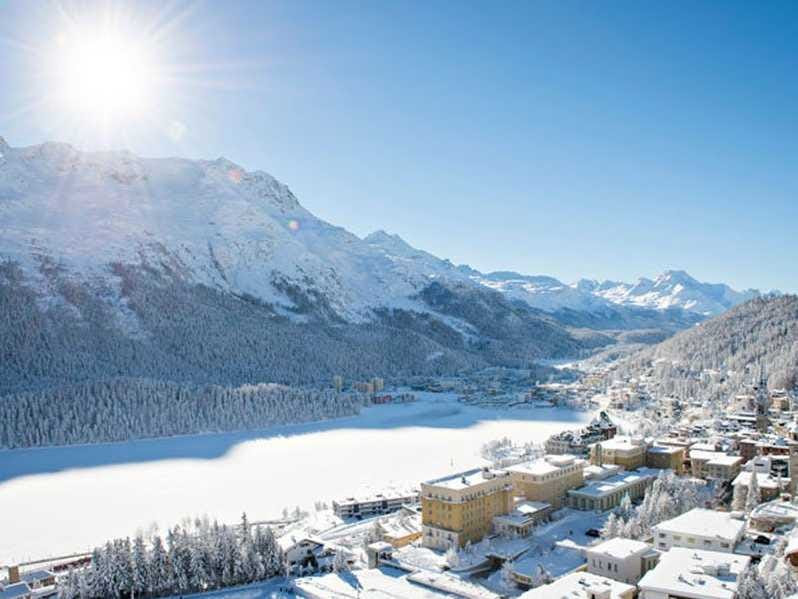 It all began in St Moritz 150 years ago, when the proprietor of the Kulm Hotel, a certain Johannes Badrutt, promised his departing summer guests that a winter holiday would be just as enjoyable.
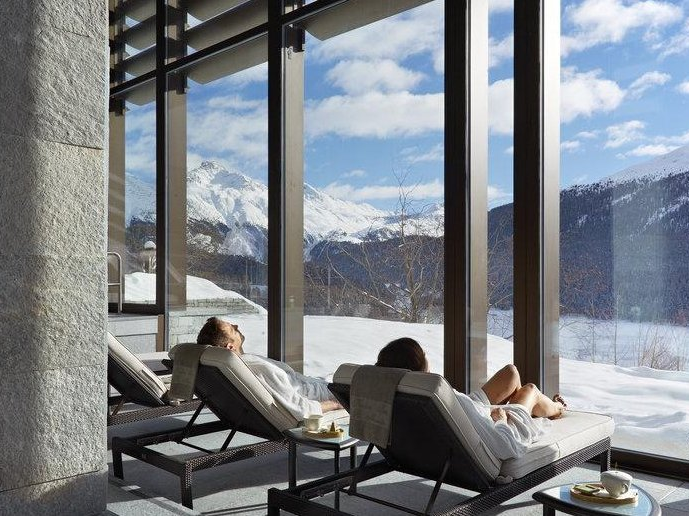 Originally they skated, curled, took sleigh rides and snow-walked, but this eventually grew into sledding -- especially on the frozen Lake Moritz (the birth of the Cresta Run) -- and sliding down the slopes with planks of wood attached to the feet. Fresh air and healthy outdoor pursuits were the order of the day then, but now the Kulm Spa has all that a sybarite as well as a serious skier needs, including indoor and outdoor swimming pools, the latter one of the best ways to enjoy the invigorating air. There are steam baths, a Finnish sauna, hydro jet baths and an infrared cabin, all providing therapeutic relief for tired or strained bodies, a full menu of massage and body treatments and a Kneipp foot bath to revive boot-strapped feet.
 Spa comforts in Aspen are best enjoyed in the elegant, traditional style of the Hotel Jerome, a mini-slalom from the centre of town, where even the standard rooms have cashmere curtains. Its Auberge Spa has a menu of body and beauty treatments which use some of the traditional healing elements of local minerals and ingredients, adapted over centuries in the environs of Roaring Fork Valley, and incorporating the latest technology.
 The signature Sanctuary of the Mountains body treatment includes a clay exfoliation followed by a healing balm of arnica, white willow and calendula and helps to relax and calm tense joints and muscles. Its High Altitude Recovery Mountain massage is a firm-pressure offering, which helps improve mobility (great for stiffness) and relieves muscle fatigue after a long day on the slopes. Guests at the hotel have special access to the world-renowned Aspen Club and Spa, with its Sports Medicine Institute and acclaimed team of fitness and rehabilitation experts. From around £600 per suite per night. hoteljerome.
 The new Chalet Sirocco in Verbier is totally private and comes complete with its own spa, with three hours of treatments included in each day's costs. An entire floor is dedicated to the spa and houses an indoor pool, hamam, steam room, sauna and hot tub. Extra treatments are available from £100 an hour, including a deep tissue and an Indian head massage.
 When privacy is what is required, head for Courchevel and the penthouse apartment on the top two floors of the Hôtel de Charme Les Airelles. The private spa on the top floor has an indoor waterfall at its entrance, a Jacuzzi on the 1600 sq m terrace with magnificent views over the mountains, a sauna with large bay window so guests can still enjoy the view, a sensory shower (herbal, rainforest, eucalyptus and more) and an ice fountain.
 Each of the four suites has its own steam shower. At the spa, meanwhile, a full range of body treatments, aromatherapy and massages (Swedish, sports, back, head and foot) are available, as are facials for sun-dried skin. From £16,000 per night
 Luis Buñuel, filmmaker, surrealist, iconoclast, moralist, and revolutionary, thought a lot about death. “Sometimes,” he wrote in 1982, a year before he died at 83, “I think the quicker the better—like the death of my friend Max Aub, who died all of a sudden during a card game. But most of the time I prefer a slower death, one that’s expected, that will let me revisit my life for a last goodbye.”


 printable version


